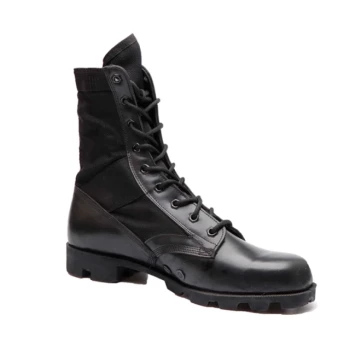
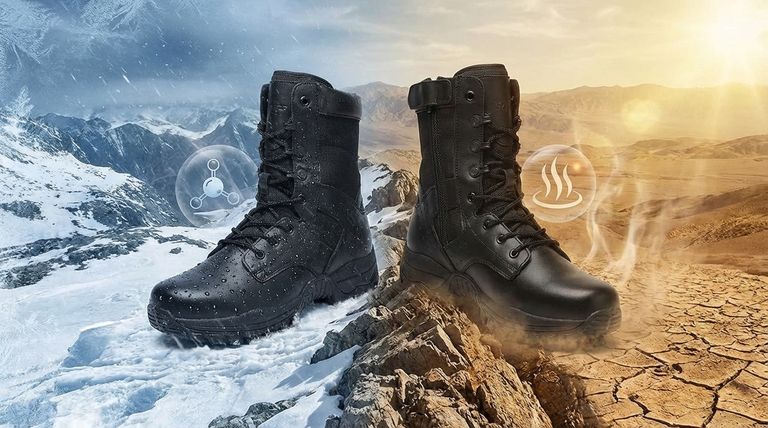
Tactical boots adapt to different climates by strategically combining specialized materials and structural designs. This isn't about a single "all-weather" boot, but rather a spectrum of models engineered for specific conditions, from insulation and waterproofing for cold, wet environments to breathable, heat-resistant materials for hot climates.
The core principle is not that one boot can do everything, but that different boots are purpose-built for specific climate challenges. Understanding the key features—membranes, insulation, and outsoles—is what allows you to select the right tool for your environment.
Managing Moisture: The Waterproofing and Breathability Balance
Your feet's ability to stay dry, whether from external rain or internal sweat, is the first line of defense against discomfort and injury. Tactical boots approach this challenge from two directions.
The Role of Waterproof Membranes
Many tactical boots designed for wet or mixed conditions incorporate a waterproof yet breathable membrane. This microscopic layer contains pores large enough to let water vapor (sweat) escape but too small for liquid water droplets to penetrate.
This technology ensures your feet stay dry from rain, puddles, or snow while preventing the clammy, uncomfortable feeling that comes from trapped sweat.
Why Breathability Matters in Heat
In hot climates, managing internal moisture is paramount. Boots designed for these environments prioritize breathability above all else.
They often use lightweight synthetics, mesh panels, and moisture-wicking liners. These materials actively pull sweat away from the skin and allow air to circulate, facilitating rapid drying and preventing heat-related issues.
Regulating Temperature: From Extreme Cold to High Heat
Maintaining a stable foot temperature is critical for both comfort and performance. Tactical boots use insulation and material selection to manage the external thermal load.
Insulation for Cold Climates
Insulated boots are rated by the weight of their insulation material, typically measured in grams. A higher number signifies more insulation and suitability for colder temperatures.
Common ratings include 200g for cool weather or high activity levels, 400g for cold temperatures, and 800g or more for extremely cold, static conditions. For the most severe cold, some boots feature separate, removable inner liners for maximum thermal protection.
Heat Resistance and Ventilation
In hot environments, the goal is to prevent heat absorption and maximize airflow. Boots built for this purpose use materials that are poor thermal conductors.
They also incorporate design features like vents or breathable fabric sections to ensure that hot air can escape and cooler air can enter, keeping the foot as comfortable as possible during long periods of wear in high heat.
Ensuring Stability: The Outsole's Critical Role
The outsole is where the boot meets the terrain, and its design is crucial for adapting to different climate-driven ground conditions.
Tread Patterns for Wet and Muddy Terrain
The pattern of a boot's sole, or tread, is engineered for specific surfaces. Deep, widely spaced lugs provide excellent traction in mud, dirt, and wet conditions by digging into the surface and shedding debris.
Specialized Treads for Snow and Ice
For winter conditions, outsoles use specific rubber compounds that remain flexible in freezing temperatures. The tread patterns are also designed to prevent snow and ice from compacting and building up, which would otherwise reduce traction and create a dangerous, slippery surface.
Understanding the Trade-offs
There is no perfect, all-climate boot. Every design choice that enhances performance in one area necessarily creates a limitation in another. Understanding these compromises is key to making an intelligent choice.
Waterproofing vs. Breathability
This is the most significant trade-off. Even the most advanced waterproof membrane will limit a boot's overall breathability compared to a non-waterproof, vented boot. A fully waterproof boot can become a "sweat-box" during high exertion in hot weather.
Insulation vs. Mobility
Heavily insulated boots provide essential warmth but are inherently heavier and less flexible. This can reduce agility and may cause overheating during periods of intense physical activity, even in cold weather.
The "All-Season" Myth
A boot marketed as "all-season" is typically a compromise designed for moderate conditions. It will be too hot for a desert summer, not warm enough for a deep winter, and potentially less breathable than a dedicated hot-weather boot.
Making the Right Choice for Your Environment
To select the right tactical boot, you must honestly assess the primary climate you will face.
- If your primary focus is cold and wet climates: Prioritize boots with a proven waterproof membrane and at least 400g of insulation.
- If your primary focus is hot and dry or humid climates: Look for lightweight, highly breathable boots with vents and moisture-wicking liners; avoid waterproof membranes.
- If your primary focus is temperate or highly variable climates: A boot with a waterproof membrane and light insulation (around 200g) offers the most versatile performance.
Choosing the right boot is about matching its specific engineering to the demands of your environment.
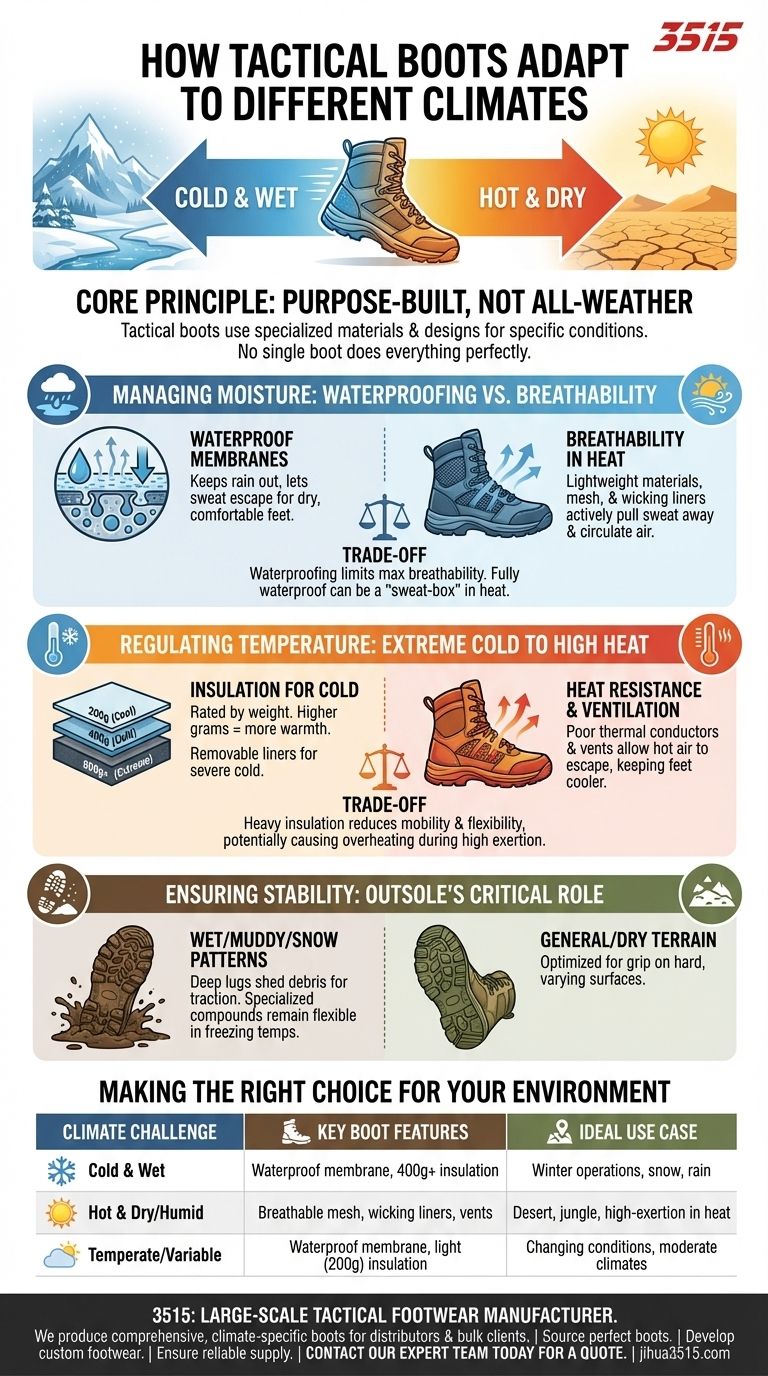
Summary Table:
| Climate Challenge | Key Boot Features | Ideal Use Case |
|---|---|---|
| Cold & Wet | Waterproof membrane, 400g+ insulation | Winter operations, snow, rain |
| Hot & Dry/Humid | Breathable mesh, moisture-wicking liners, vents | Desert, jungle, high-exertion in heat |
| Temperate/Variable | Waterproof membrane, light (200g) insulation | Changing conditions, moderate climates |
Need the right tactical boot for your climate?
As a large-scale manufacturer, 3515 produces a comprehensive range of tactical footwear for distributors, brand owners, and bulk clients. Our production capabilities encompass all types of climate-specific boots and footwear, engineered with the precise materials and construction detailed above.
We can help you:
- Source the perfect boot for your target market and environment.
- Develop custom footwear tailored to your specific climate challenges.
- Ensure reliable supply for your bulk orders.
Contact our expert team today to discuss your tactical footwear needs and get a quote.
ビジュアルガイド
関連製品
- 耐久性のある革の戦術的なブーツ卸売 & カスタム製造ブランド
- 高トラクションスエード戦術ブーツ卸売&カスタム製造
- 耐久性のある革高足首戦術ブーツ卸売 & カスタム製造
- ミッドカット タクティカルブーツ 卸売&プライベートブランド
- 卸売防水タクティカルブーツカスタムスエード&高トラクションソール