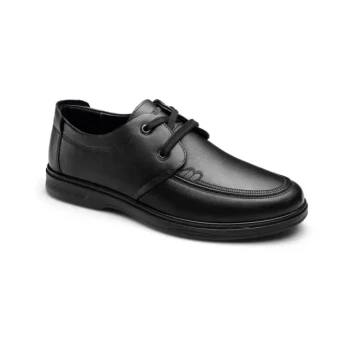
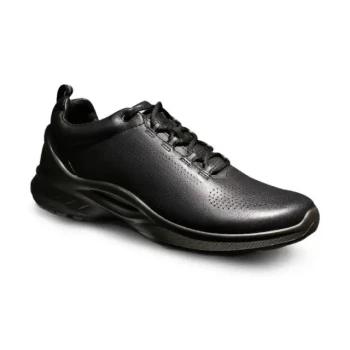
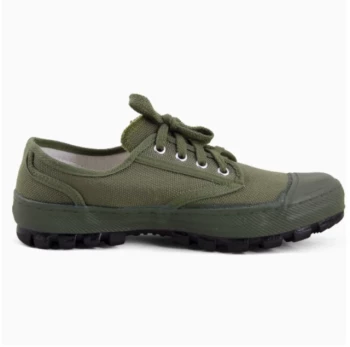
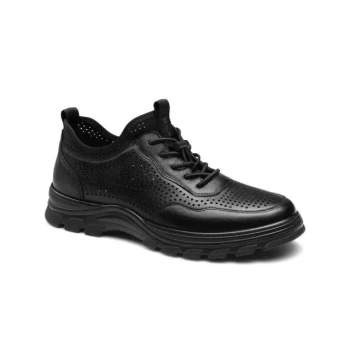
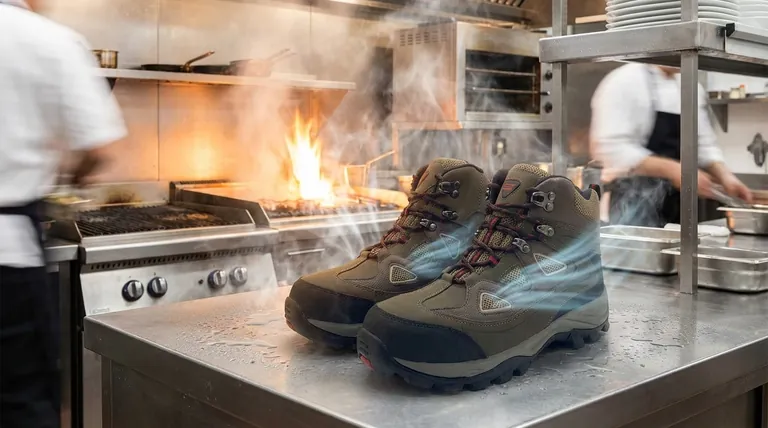
In the intense heat of a professional kitchen, a chef shoe's breathability is not a luxury—it's a core functional requirement for comfort and endurance. It works by actively managing the microclimate around your feet, allowing hot, moisture-laden air to escape while permitting cooler, drier air to circulate. This fundamental process keeps feet dry, cool, and comfortable throughout a demanding service.
The primary role of breathability is to prevent the accumulation of sweat. This moisture management is the key to avoiding a cascade of problems, from painful blisters and skin breakdown to the loss of focus and stamina over a long shift.
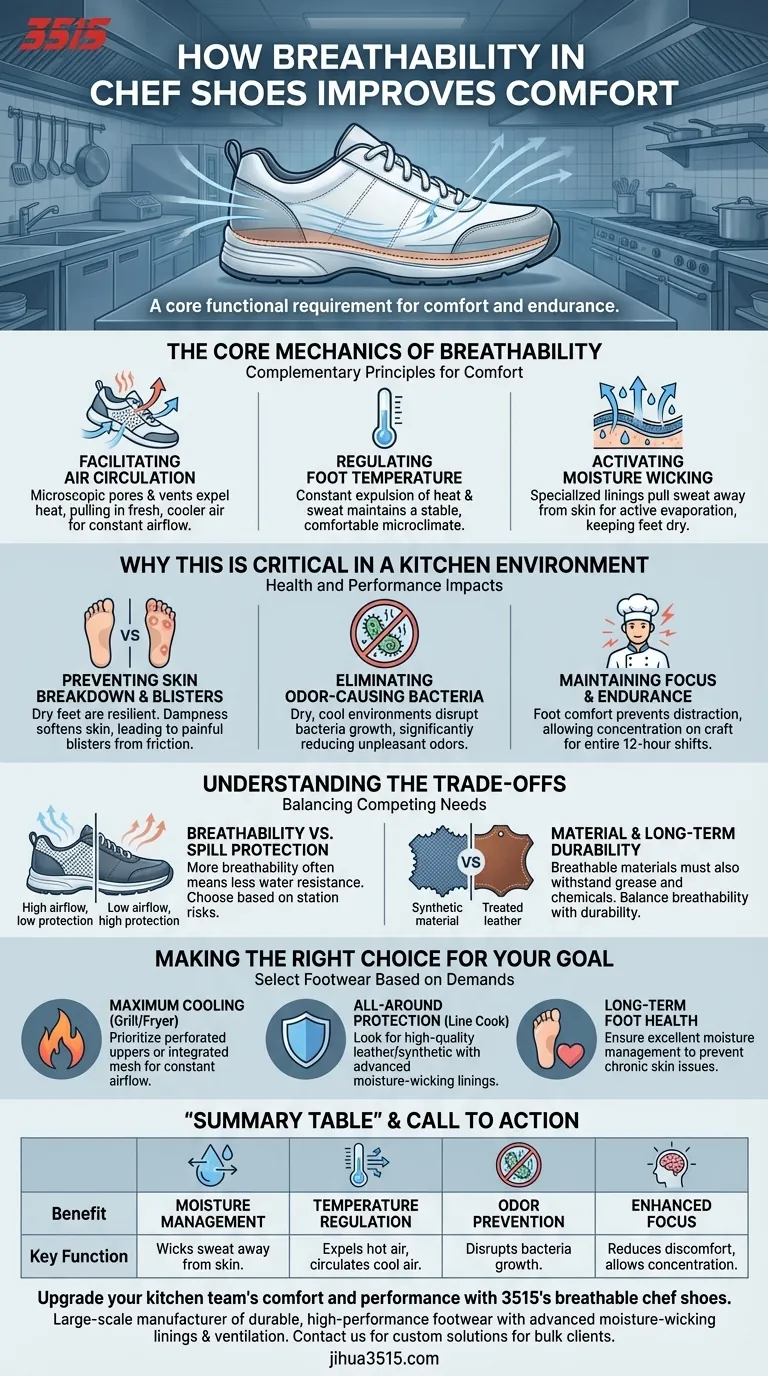
The Core Mechanics of Breathability
A truly breathable shoe operates on two complementary principles: allowing air to move freely and actively pulling moisture away from the skin.
Facilitating Air Circulation
Proper ventilation is the first step. Materials with microscopic pores, mesh panels, or dedicated vents allow the hot air that builds up inside the shoe to be pushed out with every step. This creates a vacuum effect that pulls in fresh, cooler air from the outside, establishing a constant cycle of airflow.
Activating Moisture Wicking
Beyond simple airflow, high-performance chef shoes use linings with moisture-wicking properties. These specialized fabrics are engineered to pull sweat and moisture vapor directly off your skin and transport it to the outer surface of the material, where it can evaporate quickly. This is an active process that keeps your socks and skin dry even when you're sweating.
Regulating Foot Temperature
By constantly expelling heat and actively removing sweat, a breathable shoe maintains a more stable and comfortable temperature. This prevents your feet from overheating in the high-temperature environment of a kitchen, which is a primary source of discomfort and fatigue.
Why This Is Critical in a Kitchen Environment
The consequences of poor breathability extend far beyond simple discomfort. In the unique conditions of a professional kitchen, it becomes a matter of health and professional performance.
Preventing Skin Breakdown and Blisters
Feet that are constantly damp have softer, weaker skin. This makes the skin incredibly susceptible to friction from the inside of the shoe, leading directly to the formation of painful blisters and chafing. Dry feet are far more resilient.
Eliminating Odor-Causing Bacteria
A warm, dark, and moist environment is the perfect breeding ground for the bacteria that cause foot odor. By keeping the foot dry and cool, breathable shoes disrupt this environment and significantly reduce the buildup of unpleasant odors.
Maintaining Focus and Endurance
Foot comfort has a direct impact on your ability to perform. Hot, sweaty, and aching feet are a constant distraction that drains your mental and physical energy. A comfortable foot environment allows you to focus on your craft, not your pain, for the entire duration of a 12-hour shift.
Understanding the Trade-offs
Choosing a chef shoe involves balancing competing needs. No single feature exists in a vacuum, and breathability is no exception.
Breathability vs. Spill Protection
There is often an inverse relationship between breathability and water resistance. Shoes with significant mesh panels offer superior airflow but provide little protection from hot liquid spills. Conversely, a seamless leather or rubber upper offers maximum protection but can trap heat and moisture if it doesn't incorporate a high-quality wicking liner.
Material and Long-Term Durability
The materials that enhance breathability must also withstand the harsh realities of a kitchen, including grease, sharp objects, and aggressive cleaning chemicals. Some modern synthetic materials offer excellent breathability but may not have the same long-term durability as high-quality, treated leather.
Making the Right Choice for Your Goal
Select your footwear based on the specific demands of your station and personal needs.
- If your primary focus is maximum cooling (e.g., grill or fryer station): Prioritize shoes with perforated uppers or integrated mesh panels to ensure constant airflow.
- If your primary focus is all-around protection and comfort (e.g., line cook): Look for high-quality leather or advanced synthetic shoes that explicitly mention a moisture-wicking lining system to manage sweat from the inside.
- If your primary focus is long-term foot health: Ensure any shoe you choose has excellent moisture management to prevent the skin issues that arise from constantly damp feet.
Ultimately, choosing a shoe with effective breathability is a direct investment in your daily performance, safety, and career longevity.
Summary Table:
| Benefit | Key Function |
|---|---|
| Moisture Management | Wicks sweat away from skin to prevent blisters and skin breakdown. |
| Temperature Regulation | Expels hot air and circulates cool air to reduce overheating. |
| Odor Prevention | Disrupts bacteria growth by keeping feet dry and cool. |
| Enhanced Focus | Reduces foot discomfort, allowing better concentration during long shifts. |
Upgrade your kitchen team's comfort and performance with 3515's breathable chef shoes. As a large-scale manufacturer, we produce a comprehensive range of durable, high-performance footwear designed for distributors, brand owners, and bulk clients. Our shoes feature advanced moisture-wicking linings and ventilation systems to keep feet dry and cool in the hottest environments. Contact us today to discuss custom solutions for your needs!
ビジュアルガイド
関連製品
- 高トラクションクリートゴム底の卸売耐久性迷彩キャンバスシューズ
- 卸売快適なビジネスカジュアル靴カスタム製造
- 卸売のための習慣によって製造されるエア クッションの革ビジネス靴
- 卸売プライベートレーベル&大量注文のためのダイヤルクロージャー付きモダンなコンフォートシューズ
- カスタムOEMトレーニングシューズ卸売メーカー耐久性と通気性