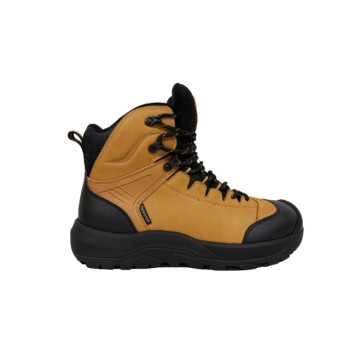
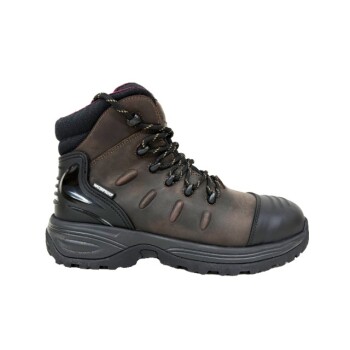
Industrial footwear serves as the primary line of defense against severe thermal and mechanical trauma. In palm oil sterilizer kettle stations, specialized boots prevent burns and skin damage caused by high-pressure steam and scalding liquids. They provide a robust, waterproof barrier that maintains structural integrity in environments where standard footwear would rapidly degrade.
In the volatile environment of a sterilizer station, footwear must perform a dual function: acting as an impermeable shield against high-temperature fluids and serving as a reinforced shell against mechanical impact.
The Critical Barrier Against Heat and Moisture
Withstanding High-Temperature Liquids
Sterilizer stations rely on liquids heated to extreme temperatures to process palm oil. Without adequate protection, accidental splashes can result in severe, immediate burns.
Industrial footwear designed for this sector utilizes waterproof construction to ensure these scalding fluids never reach the skin. This impermeability is essential for preventing deep-tissue damage during routine operations or accidental leaks.
Deflecting High-Pressure Steam
Beyond standing water, these environments are saturated with high-pressure hot water steam. Standard materials often warp or fail when exposed to this combination of heat and pressure.
Specialized boots employ heat-resistant materials capable of maintaining their shape and protective qualities under thermal stress. This ensures the worker remains protected even when working in close proximity to steam vents or pressurized equipment.
Mechanical Protection in Heavy Operations
Guarding Against Impact and Compression
While thermal hazards are a primary concern, sterilizer stations also involve the movement of heavy machinery. The risk of crushing injuries to the feet is significant in these active zones.
Reinforced safety boots incorporate protective elements, such as steel or composite toes, to shield the foot from mechanical crushing. This creates a hardened shell that absorbs impact, keeping physical trauma within controlled, survivable limits.
A Component of Total Safety
Footwear does not function in isolation; it is a foundational element of a complete Personal Protective Equipment (PPE) set. By securing the feet, the worker establishes a stable base that complements other safety gear.
This holistic approach ensures that while the upper body is protected by vests or helmets, the feet—often the closest point of contact to floor-level hazards—are not the weak link in the safety chain.
Understanding the Trade-offs
Weight vs. Protection
To achieve the necessary resistance against heat and crushing forces, industrial footwear often utilizes heavier, denser materials. This can lead to increased fatigue for workers who are on their feet for long shifts compared to lighter, less protective options.
Breathability vs. Impermeability
The requirement for total waterproofing to stop scalding liquids often reduces the boot's ability to breathe. While this is necessary to prevent burns, it can lead to moisture buildup inside the boot from perspiration, which requires proper sock management to maintain foot health.
Making the Right Choice for Your Safety Goals
To ensure maximum safety in a sterilizer kettle station, prioritize your footwear selection based on the specific risks of your station layout:
- If your primary focus is Thermal Protection: Prioritize boots with certified heat-resistant outsoles and fully waterproof uppers to negate the risk of steam burns.
- If your primary focus is Mechanical Safety: Ensure the footwear meets high impact and compression ratings to protect against heavy machinery accidents.
Ultimately, the right industrial footwear transforms a high-risk environment into a manageable workspace by neutralizing the threats of heat and pressure before they touch the skin.
Summary Table:
| Hazard Type | Protection Mechanism | Key Benefit |
|---|---|---|
| Scalding Liquids | Waterproof Construction | Prevents deep-tissue burns from high-temp fluids |
| High-Pressure Steam | Heat-Resistant Materials | Maintains boot integrity and shields skin from steam |
| Mechanical Impact | Steel/Composite Toes | Protects feet from crushing by heavy machinery |
| Operational Stress | Stable Foundation | Complements total PPE set for holistic worker safety |
Secure Your Workforce with Industry-Leading Protection
As a large-scale manufacturer serving distributors and brand owners, 3515 offers comprehensive production capabilities for all footwear types, anchored by our flagship Safety Shoes series. Our extensive portfolio covers work and tactical boots, outdoor shoes, training shoes, and sneakers, as well as Dress & Formal shoes to meet diverse bulk requirements.
Whether you need boots that withstand the extreme heat of palm oil sterilizer stations or tactical gear for rugged environments, we deliver high-performance solutions tailored to your brand’s needs. Contact us today to discuss your volume requirements and let us help you build a safer workplace with our world-class manufacturing expertise.
関連製品
- プレミアム難燃性防水安全ブーツ・靴
- カスタム卸売革安全ブーツ直接工場製造
- 卸売用プレミアムKPUアスレチック安全靴
- プレミアムハイカット防水安全ブーツ 製造・卸売ソリューション
- カスタマイズ可能なアンチスマッシュ安全ブーツ卸売 & プライベート ラベル製造
よくある質問
- What are the primary technical advantages of using Polyurethane (PUR) materials in safety footwear? Durability & Comfort
- OSHA承認のブーツとは何ですか?コンプライアンスに準拠した安全靴に関する真実
- What role do industrial safety shoes and boots play in fire rescue interventions during infectious disease pandemics?
- What is the primary function of standardized safety shoes? Essential Protection & Automated Compliance for Labs
- How do specialized safety shoes protect against battery maintenance injuries? Prevent Impact and Chemical Burns