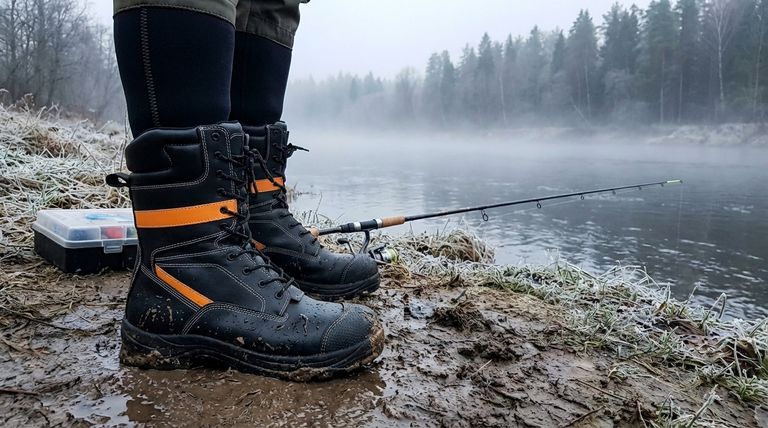
Yes, you absolutely should, particularly if your goal is to maximize warmth in cold and wet conditions. Wearing neoprene socks inside Wellington boots creates a highly effective insulation system, trapping a layer of air and water that your body warms, much like a wetsuit functions. This combination can significantly enhance comfort and prevent cold feet during prolonged exposure to low temperatures.
The core principle is simple: combining a neoprene sock with a Wellington boot creates a powerful, dual-barrier system against cold and moisture. However, this system prioritizes insulation over breathability, making it ideal for certain conditions but less suitable for others.
How Neoprene Enhances Wellington Boot Performance
Pairing these two items isn't just about adding a layer; it's about creating a functional system that leverages the properties of both the boot and the sock.
Unmatched Thermal Insulation
Neoprene’s primary strength is its exceptional ability to insulate. The material is filled with tiny nitrogen gas bubbles that prevent heat from escaping.
When worn inside a Wellington, it traps your body heat, keeping your feet warm even when the outside temperature is near freezing. This makes it ideal for static activities like fishing, hunting, or standing outdoors in winter.
A Barrier Against Moisture
Wellington boots are waterproof from the outside, but moisture can still get in over the top. Neoprene socks provide a second layer of defense.
Because neoprene is non-absorbent, it keeps water from directly touching your skin. Even if your boot fills with water, the sock will trap a thin layer against your foot, which your body quickly warms, preventing the shock of cold water.
Improved Fit and Blister Prevention
Many Wellington boots have a generic, roomy fit. This extra space can cause your foot to slide, leading to friction and painful blisters.
A 3mm or 5mm neoprene sock adds volume, filling the empty space for a snugger, more secure fit. This cushioning effect not only improves comfort but drastically reduces the rubbing that causes blisters on long walks.
Understanding the Trade-offs
While the benefits are significant, this combination is not a universal solution. Understanding its limitations is key to using it effectively.
The Breathability Challenge
Neoprene is not a breathable material. While it excels at keeping external water out, it also traps sweat in.
During high-exertion activities where your feet sweat significantly, this moisture has nowhere to go. This can lead to a damp, clammy feeling and is not ideal for warmer weather or strenuous work.
The Double-Up Dilemma
Many premium Wellington boots already come with a built-in neoprene lining. Wearing neoprene socks inside a neoprene-lined boot is often redundant.
This combination can create excessive heat and trap an enormous amount of sweat, leading to discomfort. As a rule, choose one or the other: neoprene socks in a standard boot, or a quality wool sock in a neoprene-lined boot.
Alternatives for Active Use
For situations involving long-distance walking or vigorous work, merino wool socks are often a superior choice.
Merino wool provides excellent warmth while also being highly breathable. It can absorb a significant amount of moisture before feeling wet and will continue to insulate even when damp, making it a more versatile option for managing sweat and temperature across changing conditions.
Choosing the Right Sock for Your Activity
Your decision should be based entirely on your environment and activity level.
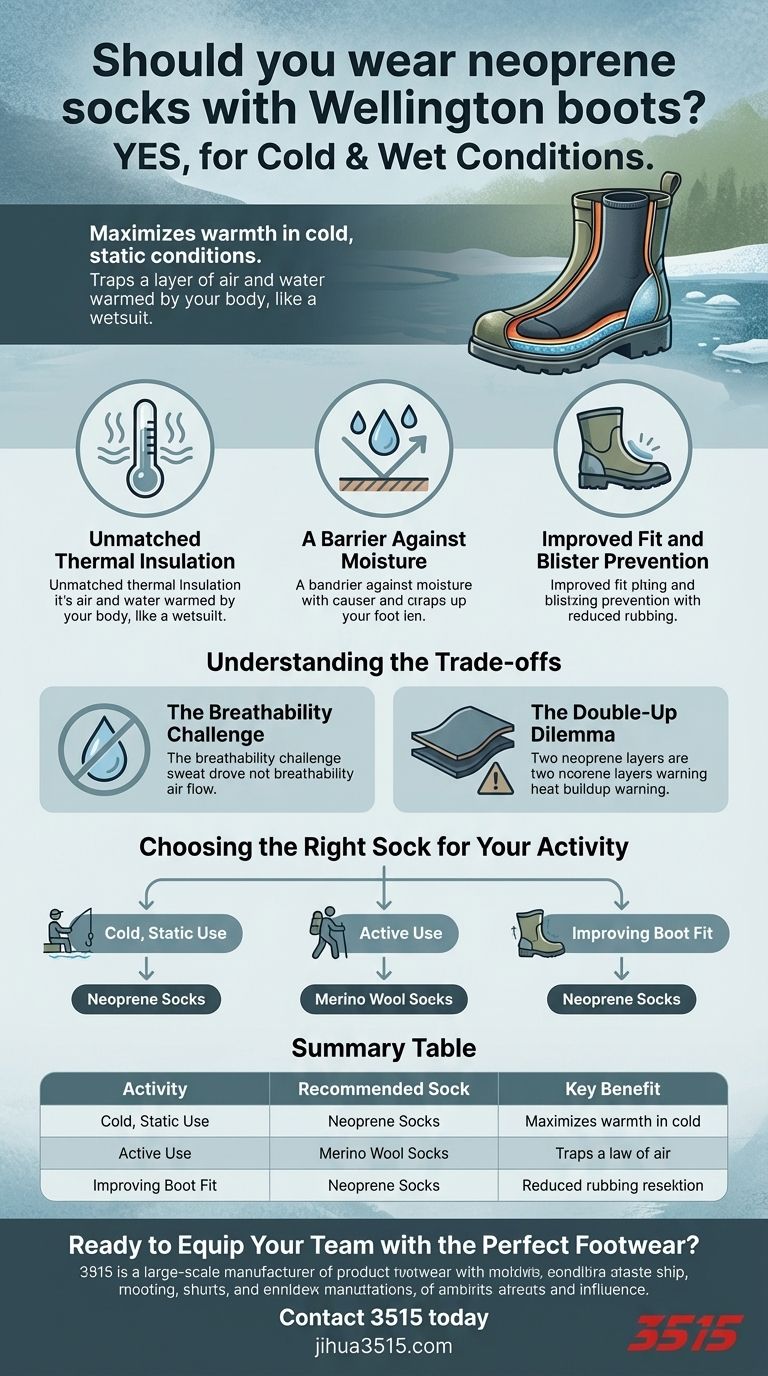
- If your primary focus is maximum warmth in cold, static conditions: Neoprene socks are the undisputed champion for keeping feet warm while standing or sitting in the cold.
- If your primary focus is all-day comfort during active use: A high-quality merino wool sock offers a better balance of warmth and moisture-wicking breathability.
- If your primary focus is improving the fit of a loose boot: A neoprene sock is an excellent tool for adding volume and cushioning to prevent blisters.
Ultimately, thinking of your socks as a crucial piece of technical gear is the key to comfort and performance.
Summary Table:
| Activity / Condition | Recommended Sock Type | Key Benefit |
|---|---|---|
| Cold, Static Use (e.g., fishing, hunting) | Neoprene Socks | Unmatched thermal insulation, keeps feet warm even in water. |
| Active Use (e.g., long walks, work) | Merino Wool Socks | Excellent warmth with breathability, wicks moisture. |
| Improving Boot Fit | Neoprene Socks | Adds volume and cushioning to prevent blisters in loose boots. |
Ready to Equip Your Team with the Perfect Footwear?
As a large-scale manufacturer, 3515 produces a comprehensive range of durable Wellington boots and performance footwear for distributors, brand owners, and bulk clients. Whether your customers need standard boots for pairing with technical socks or premium neoprene-lined models, we have the production capabilities and expertise to meet your demands.
Contact 3515 today to discuss your footwear needs and discover how we can enhance your product line.
ビジュアルガイド
関連製品
- 耐久性のある防水レインブーツ|卸売&ブランドのためのカスタムメーカー
- 耐久性グッドイヤーウェルトレザーワークブーツ卸売-プライベートブランド
- 卸売の耐久性のある革ワークブーツ|8インチグッドイヤーウェルトメーカー
- 高トラクションスエード戦術ブーツ卸売&カスタム製造
- クイックレーシングを備えたプレミアム卸売タクティカルスタイルの安全靴ブーツ