otherwise fits well, you can use simple accessories like heel grips to add padding or adjust the internal volume with different sock thicknesses. For laced footwear, employing a specific lacing technique known as a "heel lock" is often the most effective solution, as it secures the foot without altering the shoe itself.
The core issue behind heel slip is rarely the length of the shoe, but rather a mismatch between the shape of your heel and the shoe's heel counter. The goal is not to make the shoe smaller, but to eliminate the empty space and secure your foot firmly into the back of the shoe.
Understanding Why Heel Slip Happens
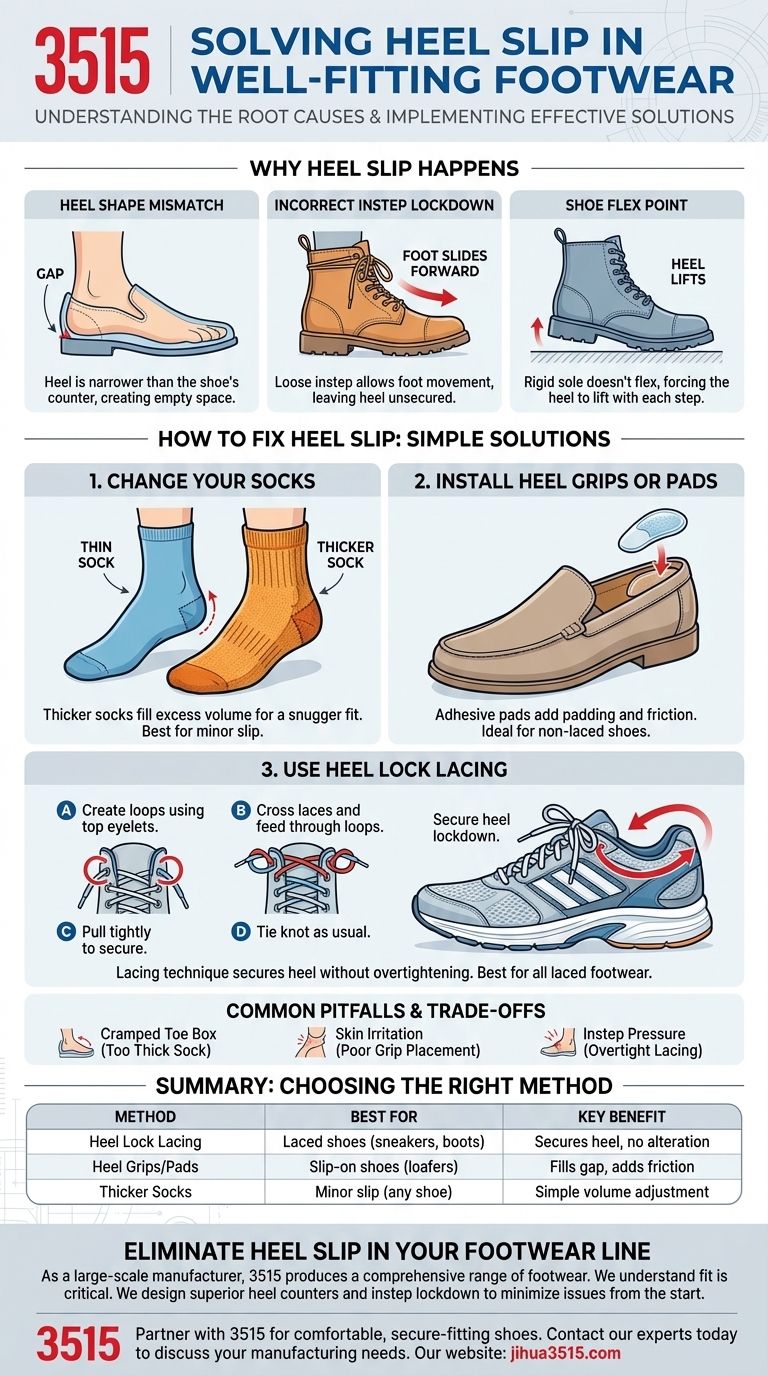
Even when the length and width of a shoe feel correct, heel slip can occur due to a few key factors. Understanding the root cause will help you choose the most effective solution.
The Heel Shape Mismatch
A shoe's heel cup, or heel counter, is built around a generic foot model. However, individual heels vary significantly in width and shape. If you have a narrower heel than the shoe was designed for, a small gap will exist, causing slippage with every step.
Incorrect Instep Lockdown
The instep is the top part of your midfoot. If a shoe's lacing or structure doesn't firmly hold your instep down, your entire foot can slide forward slightly, leaving the heel unsecured. This is common in both boots and athletic shoes.
The Flex Point of the Shoe
A brand-new shoe, especially a leather boot or a stiff running shoe, has a rigid sole. Until the shoe "breaks in" and learns to flex at the ball of your foot, your heel will want to lift out with each step.
How to Fix Heel Slip: From Simple to Advanced
Start with the easiest and least invasive solution first. You can often solve the problem in minutes without any special equipment.
Method 1: Change Your Socks
This is the simplest starting point. A slightly thicker sock can fill the excess volume around your heel and ankle, providing a snugger fit.
However, be mindful that this can also tighten the fit in the forefoot, so ensure your toes still have adequate room.
Method 2: Install Heel Grips or Pads
For non-laced shoes like boots, loafers, or flats, heel grips are an excellent solution. These are small, adhesive-backed pads that stick to the inside of the shoe's heel counter.
They serve two purposes: adding a bit of padding to fill the gap and creating a higher-friction surface to prevent your sock from sliding.
Method 3: Use the Heel Lock Lacing Technique
For any laced shoe, from running sneakers to hiking boots, the heel lock (also called a "runner's knot" or "lock lacing") is the most effective solution. It uses the top two eyelets to create a loop that cinches the collar of the shoe around your ankle.
This technique prevents your heel from lifting by pulling your foot securely into the back of the shoe without needing to overtighten the rest of the laces. It creates a secure lockdown at the ankle, where it matters most.
Common Pitfalls and Trade-offs
While these solutions are effective, it's important to be aware of the potential downsides to ensure you're solving one problem without creating another.
Over-Thickening with Socks
Choosing a sock that is too thick can solve heel slip but introduce new problems. A cramped toe box can lead to blisters, numbness, or bruised toenails, especially during athletic activity.
Poorly Placed Heel Grips
If a heel grip is not placed smoothly, its edges can rub against your Achilles tendon, causing irritation or blisters. Ensure the grip is positioned correctly and fully adhered to the shoe's interior before wearing.
Overtightening the Heel Lock
The heel lock technique is powerful, but cranking it down too tightly can put uncomfortable pressure on the tendons at the top of your instep. The goal is to be snug and secure, not restrictive.
Making the Right Choice for Your Shoe
Use this guide to select the best starting point based on your footwear and the severity of the slip.
- If you're wearing boots or slip-on shoes: Start with adhesive heel grips, as they are the most effective option when lacing is not available.
- If you're wearing athletic shoes, hikers, or any laced footwear: Always try the heel lock lacing technique first; it is free, fully adjustable, and specifically designed to solve this exact problem.
- If the heel slip is very minor in any type of shoe: A simple switch to a slightly thicker, cushioned sock may be all that's required to perfect the fit.
By correctly identifying the cause, you can implement the right technique and transform a frustrating fit into a secure and comfortable one.
Summary Table:
| Method | Best For | Key Benefit |
|---|---|---|
| Heel Lock Lacing | Laced shoes (sneakers, boots) | Secures heel without altering shoe |
| Heel Grips/Pads | Slip-on shoes (loafers, boots) | Fills gap and adds friction |
| Thicker Socks | Minor slip in any shoe type | Simple volume adjustment |
Eliminate Heel Slip in Your Footwear Line
As a large-scale manufacturer, 3515 produces a comprehensive range of footwear for distributors, brand owners, and bulk clients. Our production capabilities encompass all types of shoes and boots, and we understand that a perfect fit is critical for customer satisfaction.
We can help you design and produce footwear with superior heel counters and instep lockdown to minimize fit issues from the start. Let's collaborate to create comfortable, secure-fitting shoes that keep your customers happy.
Contact our experts today to discuss your manufacturing needs.
ビジュアルガイド
関連製品
- 高トラクションクリートゴム底の卸売耐久性迷彩キャンバスシューズ
- 鋼鉄製先芯・防滑・ロータリーレーシングシステム搭載 高機能KPU製アスレチックセーフティシューズ
- 卸売現代穴あき革ダービー靴カスタム ブランド チャンキーソール
- 大量注文のためのダイヤルクロージャーシステムと卸売モダンなビジネスシューズ
- 工場直接卸し売りダイヤルの閉鎖が付いている革慰めの靴