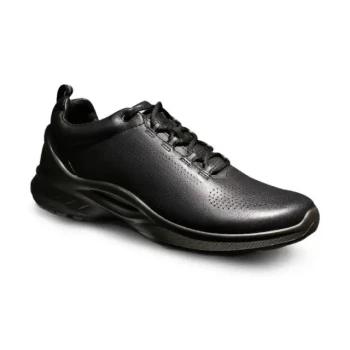
3D CAD tools serve as the definitive bridge between clinical data and footwear manufacturing. By allowing designers to manipulate digital models with millimeter-level precision, these tools facilitate the creation of specialized "depth lasts" that accommodate the unique volume requirements and sensitivities of the diabetic foot. This digital approach replaces manual guesswork with scientific consistency, ensuring that critical dimensions like ball girth and toe allowance are perfectly tailored to prevent injury.
The core value of 3D CAD in diabetic shoe design lies in its ability to transform subjective craftsmanship into a repeatable, data-driven process. By integrating digital modeling with rapid prototyping and pressure analysis, designers can ensure every last provides the precise internal environment necessary to prevent diabetic foot ulcers.
Achieving Clinical Precision through Digital Modeling
Mastering Critical Foot Parameters
3D CAD software enables the precise adjustment of ball girth, waist girth, and toe allowance based on specific patient data. This level of control is essential for diabetic patients who often require "depth shoes" to accommodate edema or orthotic inserts without causing friction.
Customizing Specialized Geometric Shapes
Unlike standard footwear, diabetic lasts require specific geometric modifications to eliminate pressure points. Digital tools allow designers to sculpt the last to provide additional vertical space in the toe box and smoother transitions across the midfoot, which are difficult to achieve consistently through traditional manual carving.
Ensuring Scientific Consistency via Rapid Grading
Once a base design is perfected, CAD tools allow for rapid digital grading across a full range of sizes. This ensures that the clinical protections built into the initial design—such as the specific curvature of the arch—are maintained with mathematical accuracy as the shoe size increases or decreases.
Bridging the Gap with Rapid Prototyping
Accelerating Design Validation
The integration of 3D printing technology allows designers to instantly convert CAD models into physical prototypes. By using materials like thermoplastic ABS, designers can physically inspect the last for surface smoothness and regional transitions before moving to expensive production molds.
Reducing Manufacturing Risk
Physical prototypes serve as the final checkpoint for design correction and refinement. This step significantly reduces the financial risk of mass production by allowing designers to catch errors in volume or shape that might not be immediately apparent on a 2-4D screen.
Validating Efficacy with Quantitative Data
Monitoring Pressure Distribution
The design process often incorporates pressure sensor systems to monitor how the foot interacts with the proposed last shape in real-time. This data provides a quantitative "heat map," allowing designers to see exactly where pressure is concentrated and adjust the CAD model accordingly.
Targeted Ulcer Prevention
By identifying high-pressure areas, such as the metatarsal heads, designers can use CAD tools to hollow out or redistribute volume in the last. This targeted approach is a critical quality control measure that ensures the final shoe provides the clinical protection necessary to prevent skin breakdown and ulcers.
Understanding the Trade-offs
The Technical Barrier to Entry
While 3D CAD tools offer superior precision, they require a significant initial investment in software and hardware. Furthermore, there is a steep learning curve for traditional last-makers, which can create a temporary bottleneck in the transition from manual to digital workflows.
Limits of Digital Simulation
Digital models can simulate shape perfectly, but they often struggle to account for the dynamic behavior of soft tissue under weight-bearing conditions. Designers must still rely on physical trial fittings and sensor data to verify that the digital "static" model performs correctly when a patient is actually walking.
How to Apply This to Your Project
Making the Right Choice for Your Goal
- If your primary focus is patient-specific customization: Prioritize CAD software that integrates directly with 3D foot scanning data to automate the initial last shaping.
- If your primary focus is reducing time-to-market: Invest in high-speed 3D printing equipment to enable same-day physical verification of your digital designs.
- If your primary focus is clinical efficacy: Ensure your workflow includes a pressure-mapping phase to validate that your CAD modifications are successfully offloading high-risk areas.
By moving from manual carving to a 3D CAD-driven workflow, you ensure that every design choice is backed by data and reproducible across every size you produce.
Summary Table:
| Feature | Traditional Manual Design | 3D CAD Digital Design |
|---|---|---|
| Precision Level | Subjective / Millimeter range | Mathematical / Sub-millimeter precision |
| Consistency | Variable between craftsmen | 100% repeatable across all sizes |
| Design Speed | Slow manual carving/shaping | Rapid digital manipulation & grading |
| Validation | Physical wear testing only | Digital pressure mapping & 3D printing |
| Complexity | Difficult to achieve deep volume | Easy adjustment for depth & orthotics |
Partner with 3515 for Advanced Footwear Manufacturing
As a large-scale manufacturer serving global distributors and brand owners, 3515 leverages cutting-edge technology to meet the most demanding clinical and technical specifications. Whether you are looking to develop specialized diabetic footwear or expand your commercial range, we offer comprehensive production capabilities for all footwear types. Our expertise is anchored by our flagship Safety Shoes series, and our extensive portfolio covers work and tactical boots, outdoor shoes, training shoes, sneakers, and Dress & Formal shoes to meet your diverse bulk requirements.
Ready to elevate your product line with scientific precision and manufacturing excellence?
Contact us today to discuss your project and discover the value 3515 brings to your supply chain.
参考文献
- Van-Huan BUI, Duy-Nam PHAN. Research on Developing a Size System and Designing Shoe Lasts for Men with Diabetes in Vietnam. DOI: 10.24264/lfj.22.2.1
この記事は、以下の技術情報にも基づいています 3515 ナレッジベース .
関連製品
- 卸売プライベートレーベル&大量注文のためのダイヤルクロージャー付きモダンなコンフォートシューズ
- カスタムブランドの卸売耐久性と通気性のトレーニングシューズ
- 大量注文のためのダイヤルクロージャーシステムと卸売モダンなビジネスシューズ
- 卸し売り及び習慣OEMの製造業のための軽量の通気性の訓練の靴
- カスタム製造のためのダイヤルの閉鎖が付いている卸し売り慰めの服の靴