The first engineer boots were produced between 1937 and 1939 by the West Coast Shoe Company (Wesco) and the Chippewa Shoe Manufacturing Company. This new style of footwear was not an evolution of military or frontier boots but a direct response to the hazardous working conditions of a modern, industrial America.
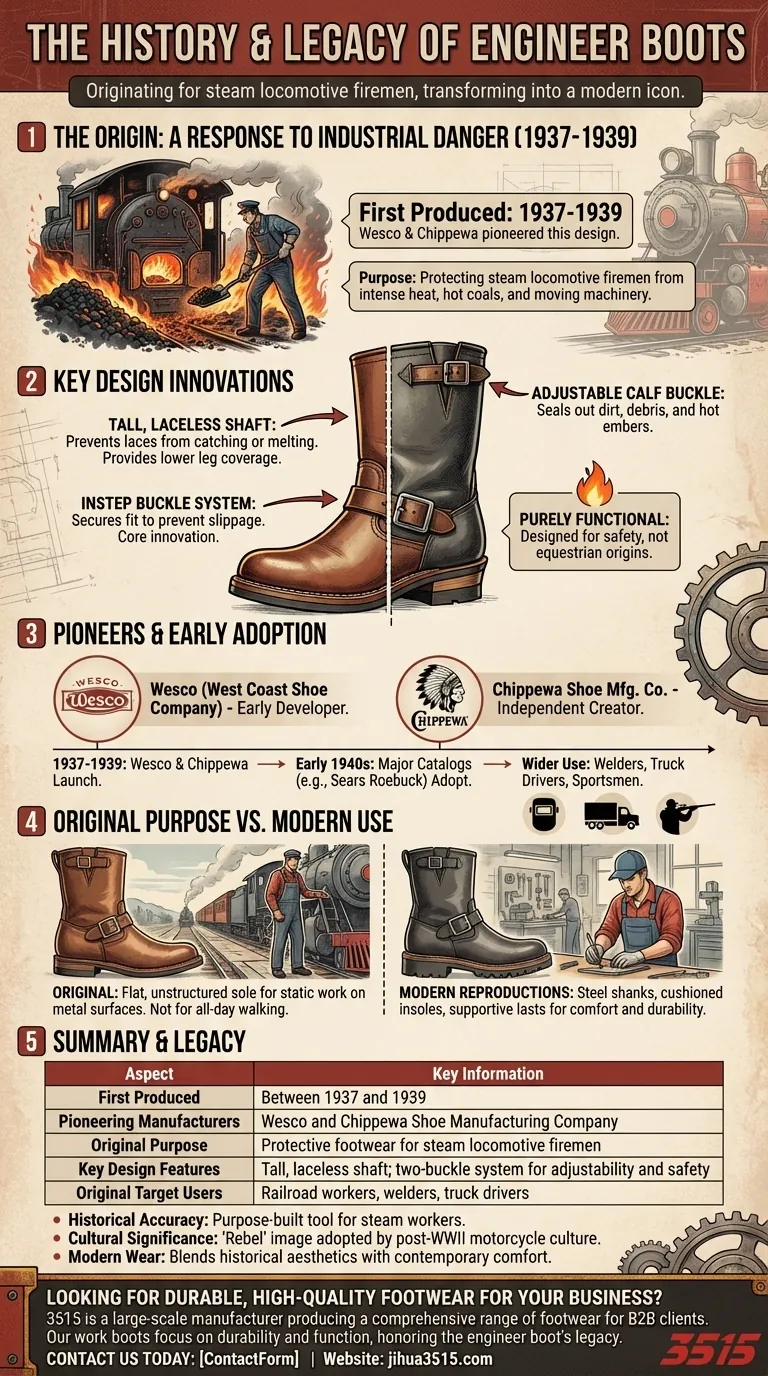
The engineer boot was born from a specific need: protecting the feet of steam locomotive firemen. Its defining features—a tall, laceless shaft and adjustable buckles—were purely functional solutions to the dangers of working with fire, hot coals, and heavy machinery.
The Context: An Industrial Problem
A Response to a New Danger
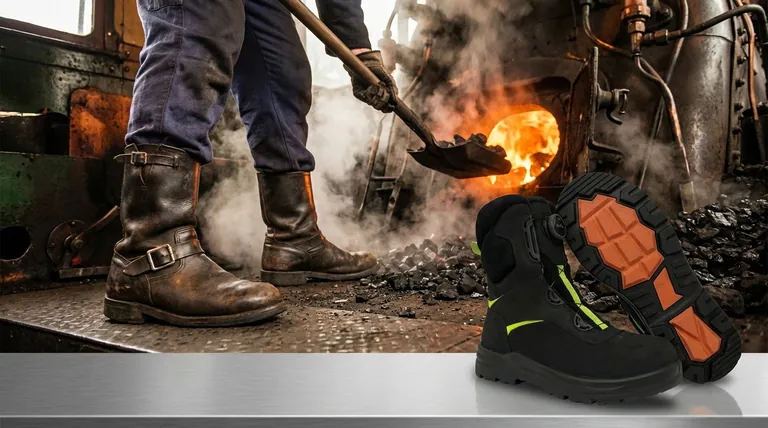
The design of the engineer boot is directly tied to the men who shoveled coal into the fireboxes of steam locomotives. They needed a boot that could withstand intense heat and protect them from flying embers and hot coals.
The tall, stovepipe shaft provided coverage for the lower leg, while the lack of laces was a critical safety feature. Laces could get caught on machinery or melt and break when exposed to stray coals, making a laceless design far more practical and safe.
Key Design Innovations
The engineer boot's two-buckle system was its core innovation. An instep strap and buckle allowed the wearer to cinch the boot down for a secure fit, preventing slippage while working.
A second buckle at the top of the shaft let the user adjust the fit around their calf, sealing out dirt, debris, and hot embers. This combination of protection and adjustability defined the new style.
The Pioneers and Early Adoption
Wesco and Chippewa Lead the Way
Between 1937 and 1939, both Wesco and Chippewa independently developed and began selling this new style of pull-on work boot. They were created specifically for this industrial purpose, separating them from the lace-up logger boots or cavalry-style riding boots of the era.
From Niche to Mainstream
The boot's practical design quickly found a broader audience. By the early 1940s, major catalog companies like Sears Roebuck were offering their own versions of the engineer boot.
This wider availability made them popular not just with railroad workers but also with welders, truck drivers, and sportsmen who valued their durability and protective qualities.
Understanding the Trade-offs
Original Purpose vs. Modern Use
The original engineer boot was designed for protection, not necessarily for all-day walking comfort or support. Its flat, unstructured sole was suitable for the relatively static work on a locomotive footplate.
Modern reproductions often incorporate features like steel shanks, cushioned insoles, and more supportive lasts that were not part of the original 1930s design.
Dispelling Common Myths
A common misconception is that the engineer boot evolved from cavalry or equestrian boots. While they share a tall, pull-on silhouette, the engineer boot's origins are entirely industrial. Its buckle system and rugged construction were developed for the factory floor and the railroad, not for riding a horse.
How to Appreciate the Engineer Boot's Legacy
To fully understand this iconic piece of footwear, it's essential to separate its original function from its later cultural status.
- If your primary focus is historical accuracy: Look to the designs of the late 1930s, recognizing the boot as a purpose-built tool for steam locomotive workers.
- If your primary focus is cultural significance: Acknowledge that its "rebel" image was adopted later by post-WWII motorcycle culture, transforming the boot from workwear into a symbol of non-conformity.
- If your primary focus is modern wear: Understand that today's engineer boots blend historical aesthetics with contemporary construction for improved comfort and durability.
The engineer boot stands as a perfect example of a design where pure function ultimately evolved into a timeless cultural icon.
Summary Table:
| Aspect | Key Information |
|---|---|
| First Produced | Between 1937 and 1939 |
| Pioneering Manufacturers | West Coast Shoe Company (Wesco) and Chippewa Shoe Manufacturing Company |
| Original Purpose | Protective footwear for steam locomotive firemen |
| Key Design Features | Tall, laceless shaft; two-buckle system for adjustability and safety |
| Original Target Users | Railroad workers, welders, truck drivers |
Looking for durable, high-quality footwear for your business or brand?
As a large-scale manufacturer, 3515 produces a comprehensive range of footwear for distributors, brand owners, and bulk clients. Our production capabilities encompass all types of shoes and boots, including work boots built with the same focus on durability and function as the original engineer boots.
Contact us today to discuss your manufacturing needs and discover how we can bring quality and reliability to your product line.
ビジュアルガイド
関連製品
- 卸売・大口注文向けプレミアム防水ハイカット安全靴
- 卸し売り及び習慣OEMの製造業のための耐久の革ワークブーツ
- 耐久性のある革ワークブーツ卸売メーカー&カスタム工場
- 卸し売り及び注文の製造業のための耐久の革仕事ブーツ
- 卸売及び注文の製造業のための耐久の革Mocのつま先のワークブーツ